

16/07/2026
Five questions to ask before choosing a carton packaging supplier
The right carton packaging supplier should understand your product, your market, your production processes and the pressures your business works under, whether that’s shelf appeal, food safety, machine performance, stockholding or tight retail deadlines.
A well-designed carton can improve packing-line efficiency, reduce waste, strengthen brand presentation, support logistics and help control cost across the supply chain.
Here are five that can help you identify a carton packaging supplier with the technical knowledge, manufacturing capability and service levels your business really needs.
1. Do they understand my industry, product and packaging requirements?
A good carton packaging supplier should take time to understand what your product is, how it will be packed, where it will be sold and what demands will be placed on the carton throughout its life cycle. That includes the materials used, the print and finishing requirements, how the product is packed, and the practical realities of storage, transport and retail display. Different products require different packing.
Food packaging should be specified according to whether it is direct food contact or indirect food contact, the type of food, and the conditions of use. Indirect-contact applications may allow a wider range of materials, depending on the barrier between product and carton.
If the product is in direct contact with food (eg sausages in carton packaging) materials, inks, coatings and adhesives need to be suitable. Food has to be packaged in food safe, food grade carton packaging. And the inks must be low migration inks. However, products such as cereal bars, which are in packaging and then a box, may not need to be food grade. You need a confident supplier who is competent in recommending the correct packaging for the item; a supplier should be able to guide you confidently through those decisions and recommend a solution that is safe, compliant and fit for purpose.
Beauty, healthcare and other technical products often need cartons that perform reliably on automated packing lines, which means board grade, carton profile and construction all need to be chosen carefully. A carton that works well in a hand-packing environment may not perform in the same way on a high-speed packing line.
There is also the commercial and brand side to consider. A premium alcohol or gifting product may need a very different carton board, print finish and overall appearance than a carton designed for a DIY product or an industrial item. Details such as the material and colour inside the box need to be thought about. Packaging creates expectations; high-end packaging helps reinforce a high-end product, while practical retail packs may prioritise durability, clarity and cost-efficiency.
There are also many different varnishes and inks to think about. If the colour needs to ‘pop’, you will need to look at high end varnishes to get the look you require.
2. Can they recommend the most cost-effective solution?
The best suppliers look at the total packaging solution and identify where design, materials, logistics and production efficiency can create value.
Material: In some cases, spending slightly more on the right board grade can improve line performance, reduce crushing or damage, or create a better finish on shelf. A strong supplier will recommend different options.
Carton profile (the layout of the carton): Small design changes can improve sheet utilisation, allowing more cartons to be produced from each sheet and reducing material usage. A supplier with strong technical knowledge should be able to review whether a carton can be made more efficient without compromising performance or appearance.
Practicality: Is it easy to pack? Will it be hand packed or run on an automated line? Does it need to withstand transport, stacking or retail handling? All the questions need to be considered to offer the right solution.
Storage: Not every customer wants all of their packaging delivered in one go. If your business needs staged deliveries, stockholding or call-off orders, it makes sense to work with a supplier who can support that with warehouse solutions. The right supplier should be able to think beyond manufacture alone and help you build a packaging solution that works operationally as well as financially.
Logistics: Your supplier may have its own energy efficient fleet of delivery trucks (like we do!), ensuring it has a tight delivery schedule based on what the customer needs. It’s unusual for a customer to have the capacity to manage it themselves. You may want a supplier who can take the pressure off!
3. What level of design, artwork and technical support do they offer?
The best carton packaging suppliers add value through design, technical support and practical problem-solving.
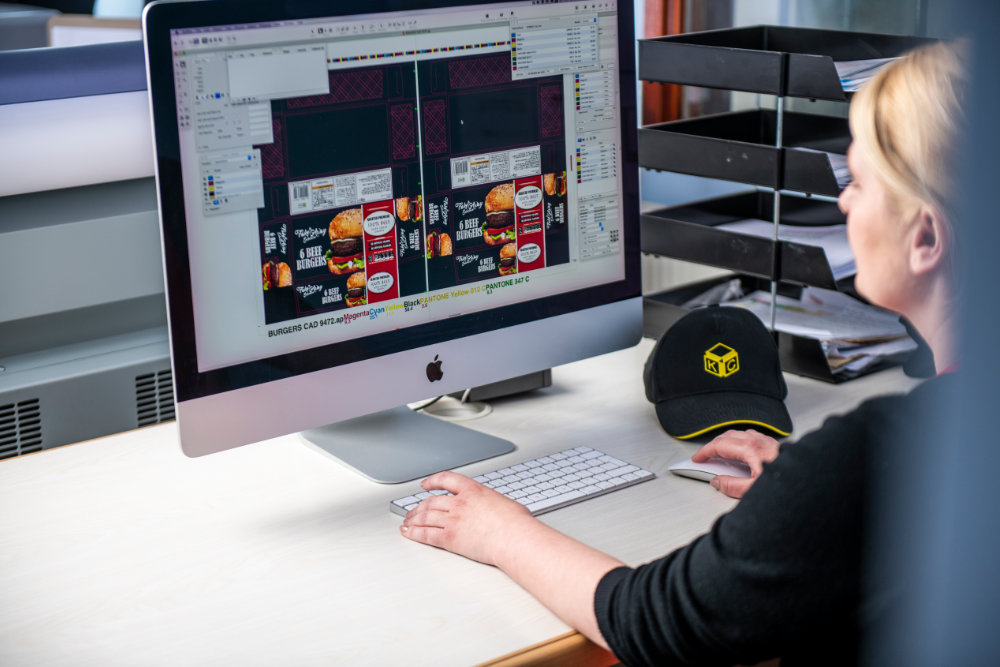
If you are developing a new product, launching a new range or refreshing your branding, ask what support is available in-house. Can the supplier help with structural carton design? Do they offer artwork support? Can they provide samples, mock-ups or 3D visuals so you can see how the pack will look and perform before committing to a production run? (We can!)
A well-designed carton should look right on the shelf and protect the product, work efficiently in production and be straightforward to assemble and fill.
Perhaps cartons are crushing, not running smoothly on the packing line, or not presenting the product as well as they should. A knowledgeable supplier should be able to review the existing pack, identify the likely causes and recommend improvements to board grade, carton structure or print specification. An experienced team can often spot issues early, before they become costly problems. They can suggest subtle design changes that improve machinability, strengthen the carton, reduce damage and improve efficiency without losing the visual impact of the pack.
There’s also development work to think about. Can the team suggest changes to the product to create something which will run better on the printing machines, items which will look better, perform better and be efficient and cost effective; for example, ensuring designs work for you!
4. Can they scale and adapt with my business?
Packaging requirements rarely stay static. Product ranges change, volumes increase, new launches happen, retail deadlines move and customers often need a faster turnaround than originally planned.
That is why it is important to choose a supplier that can scale and adapt with your business.
Ask what happens if order volumes increase unexpectedly, a product launch is brought forward or a specification changes mid-project. Can the supplier respond quickly? Do they have the people, equipment and planning capability to support urgent or changing requirements? Are they comfortable handling both smaller specialist runs and larger-volume orders?
This matters particularly in fast-moving sectors such as food, retail and supermarket supply, where customer requirements can shift quickly and lead times are often tight. A supplier needs to be responsive, honest about what they can deliver and organised enough to keep projects moving without compromising quality.
Strong communication is essential. The process should begin with a thorough brief and clear agreement on specifications, artwork, materials, quantities and timings. A good supplier will ask the right questions up front, make sure everything is properly signed off, and then manage the job in a way that gives you confidence throughout the process.
5. Do they prioritise quality, reliability and customer service?
Your packaging supplier needs to be someone you can rely on. The carton may be one part of your supply chain, but if it goes wrong, the impact can be significant: production delays, damaged stock, missed launch dates, poor shelf presentation and unnecessary cost. Quality, reliability and service should be central to your decision.
Ask how the supplier manages quality throughout the production process. What checking and sign-off procedures are in place? How do they maintain print consistency, colour accuracy and carton performance across a run? What systems are used to reduce errors and make sure the finished cartons meet specification?
Ensure your supplier has a process for thoroughly checking orders. Do they have delivery systems in place? What does their equipment look like for ensuring the process to get everything out is efficient and smooth?
And what experience does the team have? Teams with experience, like ours, can see potential problems and ensure they don’t happen.
It is also worth asking about accreditations and quality systems, particularly if you work in food or other safety-critical sectors. For example, customers may want confidence that a supplier operates to recognised packaging quality and hygiene standards and can support responsible sourcing requirements where needed. Ensure they have the right accreditations (this will depend on the product).
Are there competent delivery systems in place? For example, at Kingston Carton, we have our own logistics team who deliver the products to our customers. We have a thorough process to ensure everything goes smoothly and we can adapt to changes with our customers.
Reliability also includes lead times, responsiveness, communication, delivery performance and the ability to deal calmly and competently with changes. If you need staged deliveries, stockholding or a supplier who can work around your production schedule, make sure those systems are in place.
You want a team that is proactive, knowledgeable and easy to deal with. A team of people who care about and understand your business, solve problems quickly and make the process easier.
Choosing a supplier with confidence
Kingston Carton has the expertise, team and know-how to get all of these areas right. If you are reviewing your current packaging or looking for a new carton packaging supplier, chat to us. We can talk you through all of these questions and topic areas and help you find the right solution.
Call us on 01482 329886 or email sales@kingstoncarton.co.uk.